
Panama City Car Accident Lawyer
The other driver caused it — and now their insurance company is calling you for a recorded statement. Let us take that conversation off your hands.
Car Accident Claims in Bay County and Beyond
Most people meet the personal injury system for the first time from the driver's seat, and the introduction is not a friendly one. Within a day or two of the crash an adjuster calls, sounding helpful, asking for a recorded statement and a signed medical authorization, and sometimes floating a quick settlement number before anybody knows how badly you are actually hurt.
That call is not customer service. The recorded statement exists to lock you into a version of events before you have seen the police report, and the blanket medical authorization lets the insurer comb through years of unrelated history looking for something pre-existing to blame. The early offer is priced against what your claim looks like today, not what it will look like once treatment is finished.
Florida adds two wrinkles. It is a no-fault state, so your own personal injury protection coverage pays the first portion of your medical bills regardless of who caused the crash — and PIP has deadlines, including a requirement that you seek initial treatment within fourteen days. Separately, Florida applies modified comparative negligence, which means the percentage of blame assigned to you directly reduces what you recover, and being found more than half at fault can bar recovery entirely.
We handle the claim so you can concentrate on treatment: gathering the report and records, documenting your injuries properly, dealing with the adjusters directly, and pressing for a number that reflects the whole picture. Call 850-215-2195 to talk it through.
Auto Accident Cases We Take
Collisions on Panhandle roads — from fender-benders that turned out serious to catastrophic highway crashes.
- Rear-end collisions — Including the neck, back and soft-tissue injuries insurers routinely undervalue as "minor" regardless of what your treatment actually shows.
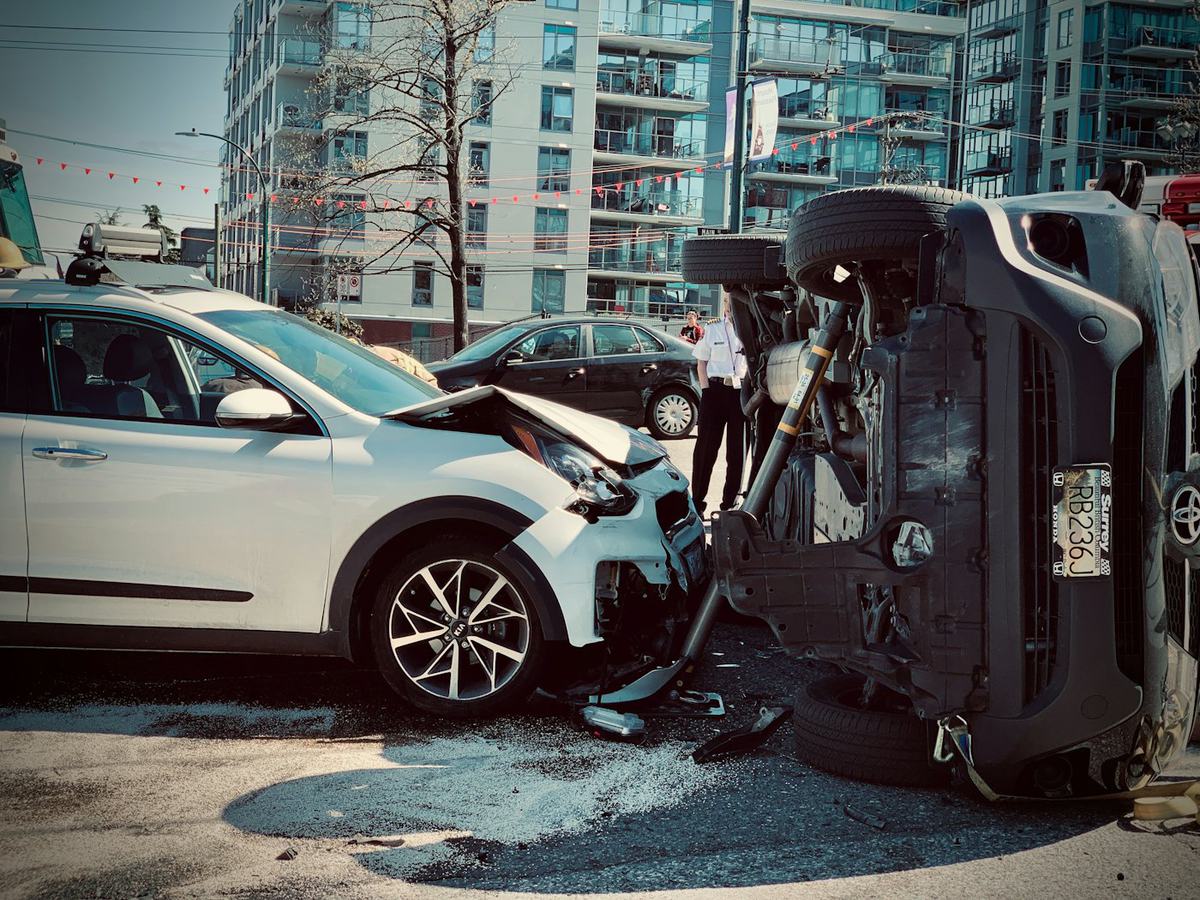
- Intersection and T-bone crashes — Side-impact collisions from failure to yield or running a light, where fault is often contested and witness evidence matters.
- Hit-and-run accidents — Where the at-fault driver is never identified, we pursue uninsured motorist coverage and any other applicable policy.
- Uninsured and underinsured motorist claims — Claims against your own UM/UIM coverage when the at-fault driver had no insurance or nowhere near enough.
- Distracted and impaired driving crashes — Cases involving texting, phone use, or a driver under the influence — where the conduct itself can affect the value of the claim.
- Multi-vehicle and chain-reaction collisions — Pile-ups where several drivers share fault and multiple insurers each try to point at someone else.
How We Handle a Car Accident Claim
Three stages, and you know where you stand in each one.
Free Case Review
We go through what happened, look at the police report and any photographs, identify every insurance policy that may apply — including your own PIP and UM coverage — and tell you honestly what we think the claim is worth pursuing.
Evidence & Medical Documentation
We collect the crash report, scene and vehicle photographs, and witness statements, and we track your treatment from the emergency room through discharge so the medical record reflects the full extent of the injury rather than a snapshot.
Settlement Negotiation or Trial
We present a documented demand and negotiate directly with the adjuster. If the insurer will not move to a fair number, we file suit — and you decide whether to accept any offer that comes in.
Injured in a Car Accident?
Before you give a recorded statement or sign anything, get a free consultation. Call 850-215-2195.
Auto Accidents — Frequently Asked Questions
You may still have coverage. Uninsured and underinsured motorist coverage on your own auto policy is built for exactly this situation, and it can also apply if the at-fault driver carried a policy far too small for the harm they caused. Depending on the facts, a resident relative's policy or an employer's commercial policy may also come into play if the driver was working at the time.
Part of our job is finding every layer of available coverage rather than stopping at the first one. See insurance claims for more.
Fault is established from evidence: the crash report, physical damage patterns, scene photographs, skid marks, traffic camera or dashcam footage, witness accounts and, in serious cases, accident reconstruction.
Florida applies modified comparative negligence, so more than one driver can share responsibility. Your recovery is reduced by your percentage of fault, and a plaintiff found more than 50 percent at fault is generally barred from recovering. The police officer's opinion in the report is influential but not the final word — fault is ultimately decided on the evidence.
You are generally not required to give the other driver's insurer a recorded statement, and doing so before you have advice rarely helps you. Adjusters are trained to ask questions that produce useful admissions — about how fast you were going, whether you saw the other car, and especially about whether you are "feeling okay," which becomes an argument that you were not seriously hurt.
You do have duties of cooperation with your own insurer under your policy. The practical answer: report the crash, and let us handle the other side's adjuster.
You can still bring a claim. Under Florida's modified comparative negligence standard your damages are reduced in proportion to your share of the blame, and being found more than 50 percent at fault generally bars recovery.
Because that percentage directly controls what you receive, insurers push hard to assign as much of it to you as possible. Their opening position on fault is a negotiating stance, not a finding — it is very much worth contesting.
Mostly it depends on your treatment. A claim generally should not be settled until your condition has stabilized enough to understand the long-term outlook, because a settlement is final — if a problem turns out to be permanent after you have signed a release, you cannot go back.
Uncomplicated claims may resolve within a few months of finishing treatment. Serious injuries, disputed liability, or cases that go into litigation take longer. We will give you a realistic estimate once we have seen the file.
Nobody can responsibly answer that from a website or a first phone call, and you should be wary of any firm that offers a number before reviewing your records. Value turns on the severity and permanence of the injury, the total cost of past and future treatment, income you lost and your capacity to earn going forward, the strength of the liability evidence, your share of fault, and — often decisively — how much insurance coverage actually exists.
What we can do is review your case at no cost and give you a candid assessment based on the facts. Call 850-215-2195.
Related Practice Areas
Trucking Accidents
Commercial trucks are governed by federal safety rules, and more than one company may share the blame for a crash.
Learn MoreInsurance Claims
A denial or a lowball offer is an opening position, not the final word on what your claim is worth.
Learn MoreAll Personal Injury Cases
See every type of injury claim The Price Law Firm handles across the Florida Panhandle.
Back to Personal InjuryVisit Our Panama City Office
We are on W. 23rd Street in Panama City, and we serve clients throughout the Florida Panhandle.
- Office2633 W. 23rd Street, Suite A
Panama City, FL 32405 - Phone
- HoursMonday – Friday: 9:00 AM – 5:00 PM
Saturday – Sunday: Closed