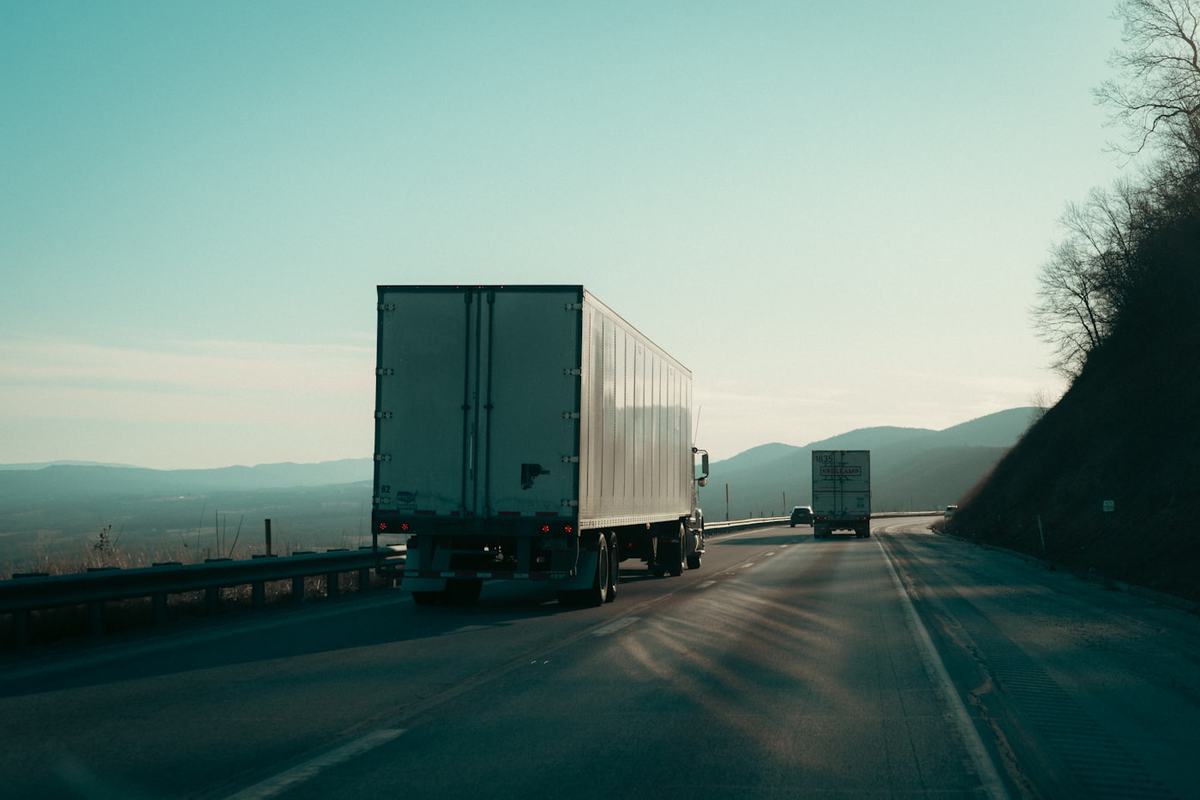
Pile-ups involving a commercial truck produce the hardest liability questions in injury law. Several vehicles, several insurers, and every one of them pointing at somebody else.
More parties than just the drivers
Beyond the drivers involved, responsibility in a truck crash can extend to:
- The motor carrier, for negligent hiring, inadequate training or supervision, pressuring drivers to exceed hours-of-service limits, or failing to maintain equipment. A carrier may also be vicariously liable for its driver's conduct within the scope of employment.
- The company that loaded the trailer, where improperly secured, unbalanced or overloaded cargo contributed to a jackknife, rollover or loss of control.
- The owner of the tractor or trailer, where that differs from the operating carrier.
- A maintenance contractor, where brake, tire or steering failure traces back to defective repair work.
- A parts manufacturer, where a component failed — which becomes a product liability question.
- A broker or shipper, in some circumstances, depending on the degree of control exercised over the transport.
Why it matters so much
Two reasons. First, insurance. Each additional responsible party generally brings its own policy, and in a serious multi-vehicle crash the total available coverage often determines whether a recovery reflects the harm done. Second, sequence. In a chain-reaction collision, establishing who initiated the sequence is frequently the central dispute, and every insurer has an interest in placing that moment somewhere other than with its own insured.
How the sequence gets proved
Rarely by witness memory alone. It is reconstructed from physical evidence — damage patterns, resting positions, skid and yaw marks, debris distribution — combined with electronic data from the truck's engine control module and logging devices, dashcam footage from any vehicle involved, and where warranted, formal accident reconstruction.
That evidence is perishable. Vehicles get repaired or salvaged, and electronic records are overwritten on routine schedules, which is why preservation demands need to go out early.
What if you are blamed too?
Being assigned some fault does not end your claim. Under Florida's modified comparative negligence standard, your recovery is reduced by your percentage of responsibility, and recovery is generally barred only if you are found more than 50 percent at fault. In a multi-vehicle crash, insurers routinely try to inflate the share attributed to injured claimants precisely because it is such an effective lever.
If you have been injured in a multi-vehicle crash involving a commercial truck, call 850-215-2195 for a free consultation.
Injured in the Florida Panhandle?
The Price Law Firm handles trucking accidents claims and other injury cases from our office in Panama City. The consultation is free and there is no obligation.